
Pneumatic layouts live or die by routing discipline. In real factories, I see two competing needs: stable pressure delivery across long runs and fast, compact connections near moving actuators. Rigid tube and pipe anchor your backbone with low losses and predictable geometry; flexible tubing makes machines buildable, serviceable, and tolerant to motion and vibration. The right choice isn’t “either/or”—it’s where each option earns its keep in your layout.
I use rigid tubing (aluminum pipe, stainless, rigid nylon) for trunks and fixed manifolds to minimize pressure drop and keep dimensions stable. I use flexible tubing (polyurethane, PVC, rubber) at endpoints and moving axes to simplify assembly, absorb vibration, and navigate tight spaces. For most OEM and plant systems, a mixed architecture delivers the lowest total cost of ownership.
Choosing isn’t trivial: pressure, temperature, chemicals, bend radius, vibration, fitting strategy, and maintenance access all interact. Below I break down where rigid lines shine, when flexible tubing is the right tool, how to balance routing constraints, and the mixed strategy I recommend for trunk lines versus local connections.
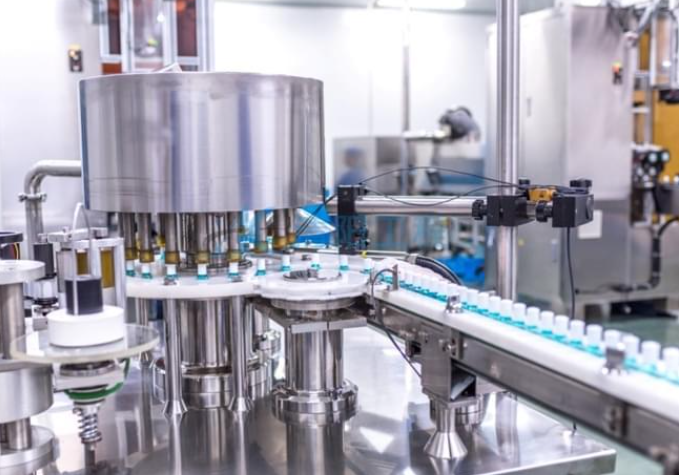
Rigid vs. Flexible Pneumatic Tubing: Quick Comparison
| Attribute | Rigid (Aluminum pipe, Stainless tube, Rigid Nylon) | Flexible (PU, PVC, Rubber) |
|---|---|---|
| Dimensional stability | Excellent; holds straight runs and precise panel routing | Moderate; can drift under load, needs clamps for neatness |
| Pressure drop over long runs | Lower; smooth ID, larger diameters, fewer kinks | Higher if tightly bent; risk of kinks and ovalization |
| Bend radius | Large; requires elbows/fittings | Tight; bend around obstacles without fittings (respect min radius) |
| Vibration tolerance | Transfers vibration; needs isolation mounts | Absorbs vibration; good for moving axes and tool drops |
| Assembly speed | Slower; cutting, deburring, alignment, supports | Faster; push-to-connect drops and quick rework |
| Maintenance | Stable, fewer leak points; harder to modify | Easy swap/reroute; fittings may need periodic inspection |
| Temperature/chemical exposure | Metals/PTFE/PA handle heat and chemicals better | PU/PVC may soften with heat; certain solvents/oils degrade |
| Space/weight | Requires brackets and defined paths; abrasion resistant | Compact routing; lighter, but may need abrasion protection |
| Typical use | Trunk lines, manifolds, panel mounts, fixed frames | Local connections, dynamic tooling, robot/cylinder motion |
| Cost over lifecycle | Lower energy/leak costs; higher install effort | Lower install cost; potential higher pressure-loss/leak costs |
What benefits do rigid lines offer for long runs and stable pressure in my setup?
Why rigid wins on distribution efficiency
- Lower pressure drop: Larger, consistent internal diameters and smooth bores (aluminum manifolds, stainless tube) keep friction losses down over tens to hundreds of feet. That stabilizes actuator timing and reduces compressor cycling.
- Geometry control: Rigid lines hold straight paths and repeatable spacing—critical for neat manifolds, panel terminations, and traceable maintenance.
- Leak resistance: Compression or high-quality push-to-connect metal fittings on rigid tube maintain seal integrity longer in static runs.
Where I specify rigid by default
- Plant or machine trunk lines from compressor/FRL to zone manifolds.
- Overhead or frame-mounted distributions that need slope for condensate drainage.
- Environments with heat, weld spatter, oils/solvents, or aggressive cleaning—metals, PTFE-lined, or rigid nylon outperform soft polymers.
Material notes (practical picks)
- Aluminum pipe systems: Modular, corrosion-resistant, fast to reconfigure; excellent balance of performance and install speed.
- Stainless steel tube: Best for high temperature, chemicals, washdown, and food/pharma.
- Rigid nylon (PA12/PA11): Good pressure and chemical resistance; lighter than metal; suitable for mid-length static runs and panels.
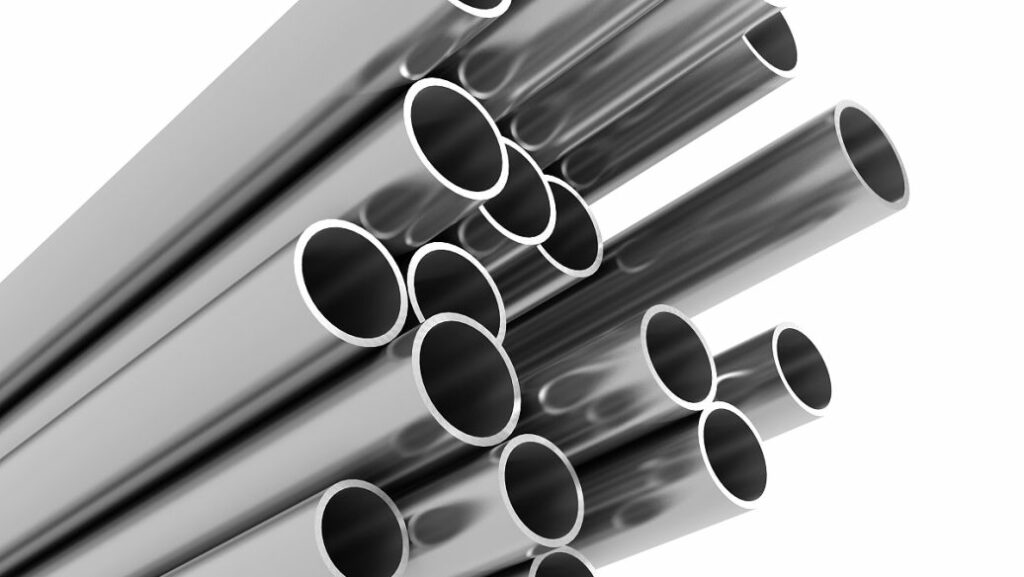
When does flexible tubing improve assembly and vibration tolerance on my machines?
Why flexible wins at the endpoint
- Bendability: Tight routing around guards, cable trays, and fixtures without adding elbows.
- Vibration and motion tolerance: Absorbs movement in high-cycle actuators, robot wrists, and tooling. Service loops prevent strain at fittings.
- Speed of assembly: Push-to-connect fittings enable fast changeovers and maintenance.
Where I specify flexible by default
- Final drops from a local manifold to cylinders, valves, grippers, and tools.
- Dynamic axes (slides, pick-and-place, rotary tables) with constant motion.
- Compact machines where space beats aesthetics, provided bend radius is respected.
Material notes (common choices)
- Polyurethane (PU): Best flexibility and abrasion resistance; my go-to for moving axes. Watch temperature derating and certain solvents.
- PVC: Economical; OK for light-duty, lower temperature; less kink-resistant than PU.
- Rubber/TPR: Good flexibility; choose carefully for compatibility and pressure rating.
How should I balance bend radius, space, and maintenance in my routing?
Bend radius and pressure loss
- Respect minimum bend radius under pressure. Tight bends can ovalize the tube, increase friction losses, and invite kinks. If you must turn sharply, use an elbow fitting or reroute.
- Use larger diameter on longer flexible runs to offset added pressure drop. I often step up one size for flexible sections beyond ~10–15 ft.
Space and protection
- Compact routing: Flexible tubing reduces space but can rub; add grommets, cable carriers, or spiral wrap where abrasion is expected.
- Supports: Even flexible runs benefit from clips every 12–24 inches to prevent sag that pools condensate.
Maintenance access and standardization
- Label manifolds and color-code tubing by function (e.g., supply, exhaust recovery, vacuum) to shorten troubleshooting time.
- Standardize push-to-connect sizes and tube materials across lines; it simplifies spares and reduces mismatch risks.
- Plan service loops: 5–10% extra length on moving axes prevents tension spikes and micro-leaks at fittings.
What mixed strategy works best for trunk lines vs. local connections in my network?
The hybrid layout I recommend for most plants and OEM machines
- Trunk/backbone: Rigid aluminum pipe or stainless tube sized for low velocity (ideal 20–30 ft/s for compressed air) with proper drainage slope and drop legs. Place zone manifolds close to consumption to minimize flexible run lengths.
- Local distribution: Short flexible PU drops from manifolds to devices. Use strain reliefs and bend-radius guides. Keep flexible sections as short and as large in diameter as practical.
- Panels and enclosures: Rigid nylon or stainless inside panels for crisp routing and identification; transition to flexible through bulkhead fittings.
Sizing and fitting guidelines
- Size trunks using worst-case simultaneous flow; target <3 psi drop from header to manifold.
- Use quality push-to-connects with stainless teeth and nickel-plated bodies for flexible tubing; compression fittings for rigid tube where vibration is minimal.
- Include shutoff and quick couplers at manifolds to isolate zones without disturbing upstream pressure.
Additional Comparison: Material, Pressure, Temperature, and Chemical Compatibility
| Material | Typical Pressure Range | Temperature Range | Chemical/UV Notes | Typical Use |
|---|---|---|---|---|
| Aluminum pipe | 150–232 psi (system dependent) | -20 to 140°F (higher with spec systems) | Excellent corrosion resistance; not for strong caustics | Facility trunks |
| Stainless steel tube (304/316) | 250+ psi (depends on tube/fitting) | -60 to 400°F | Excellent chemical/washdown | Harsh environments, washdown |
| Rigid Nylon (PA12/PA11) | 250–500 psi | -40 to 200°F | Good chemicals; absorbs moisture slightly | Panels, mid-length static runs |
| Polyurethane (PU) | 100–200 psi | -40 to 165°F | Good abrasion; some solvent sensitivity; UV needs stabilization | Flexible drops, moving axes |
| PVC/TPR | 80–150 psi | 0 to 140°F | Varies; check oils/solvents | Light-duty flexible routing |
Conclusion
Based on what I’ve seen in pneumatic systems, rigid tubing belongs to your backbone: it minimizes pressure loss, locks in geometry, and lowers energy and leak costs over time. Flexible tubing belongs at the endpoints: it speeds assembly, tolerates motion and vibration, and fits tight spaces. Balance bend radius against pressure efficiency, protect against abrasion, and standardize fittings. For most B2B industrial applications, the winning architecture is rigid trunks with short, well-managed flexible drops—this mixed strategy delivers stable performance, easier maintenance, and the lowest total cost of ownership.
FAQ
What’s the simplest rule of thumb for choosing tube size?
- For trunks, size to keep air velocity below ~30 ft/s and total drop under ~3 psi. For flexible drops, if runs exceed ~10–15 ft or include tight bends, step up one size to offset added losses.
How do I prevent kinks in flexible tubing?
- Respect minimum bend radius under pressure, add bend restrictors or elbows at tight turns, and route through cable carriers or guides on moving axes.
Do push-to-connect fittings leak more than compression fittings?
- On dynamic flexible runs, push-to-connects are ideal and reliable when installed correctly. On static rigid runs, compression fittings or high-grade push-to-connects offer excellent long-term sealing. The leak risk is more about movement and installation quality than fitting type.
What about temperature and chemicals?
- Choose metals, PTFE-lined, or rigid nylon near heat sources or aggressive cleaners. Use PU where flexibility is needed, but verify compatibility with oils/solvents and consider UV-stable variants outdoors.
How can I reduce maintenance time?
- Use labeled manifolds, color-coded tubing, standardized diameters, and quick isolation valves. Keep flexible sections short, include service loops, and inspect fittings in high-vibration areas on a scheduled interval.